Rechargeable gear is convenient, but storage and charging practices can affect your risk profile
0
The information on this website is general in nature and does not take into account your objectives, financial situation, or needs. Consider seeking personal advice from a licensed adviser before acting on any information.
Recent industry attention on lithium-ion battery fires is a timely reminder for Australian tradies that rechargeable gear is now a core business risk, not just a convenience.
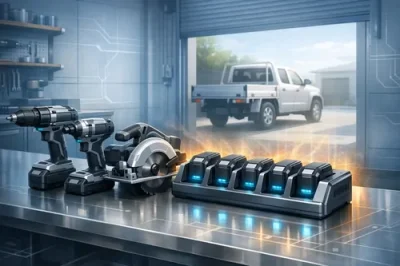
Cordless drills, grinders, saws, laser levels, test equipment, phones, tablets and battery packs are part of everyday work, but they also introduce fire, theft and interruption exposures that can be easy to overlook.
The issue is not that tradies should avoid battery-powered tools. For many trades, they are essential for productivity and mobility. The practical point is that batteries can fail if they are damaged, overheated, poorly charged, stored incorrectly or paired with unsuitable chargers. A fire that starts in a ute, van, garage, shed or workshop can quickly become much bigger than the cost of one tool.
For small trade businesses, the insurance angle is straightforward: the way tools and batteries are stored, transported and charged can affect both the likelihood of a claim and the evidence needed if something goes wrong. A damaged battery left charging overnight near flammable materials may create a very different claims conversation from a well-documented setup with compliant chargers, clear storage practices and regular checks.
This also links to sums insured. Many tradies add tools gradually over years, which means the replacement value of a kit can be far higher than expected. If batteries, chargers and specialist equipment are not included in your asset list, your cover may not reflect the real cost of getting back to work. It is worth taking time to estimate realistic replacement values before renewal, especially if your crew has grown or you have upgraded to higher-end cordless systems.
Good risk management does not need to be complicated. Useful steps include:
Using manufacturer-approved chargers and avoiding damaged leads or battery casings.
Charging batteries in a clear, ventilated area away from fuels, solvents, timber dust and packaging.
Avoiding overnight charging where there is no supervision or fire detection.
Keeping purchase records, serial numbers and photos of major tools and battery systems.
Checking whether tools are covered in vehicles, on site, in transit and at your workshop.
The bigger lesson is that tool insurance is not only about theft from a locked ute. Fire, accidental damage, storage conditions, exclusions and sub-limits can all matter. If your setup includes a workshop, employees, subcontractors or multiple vehicles, an insurance broker can help review how public liability, tools, contents and vehicle cover work together.
Battery-powered tools are here to stay. Treating them as part of your wider business risk plan can help protect your equipment, your cash flow and your ability to keep jobs moving after an unexpected incident.
Please Note: We do not endorse any specific products or companies. Some content is sourced from third parties, including press releases, and may not be independently verified for accuracy or completeness.
Recent insurance-sector commentary has put cyber risk back on the small business agenda, with attention turning to invoice fraud, email compromise, stolen devices and the way criminals target everyday payment processes. For Australian tradies, this is not just an office problem. Many trade businesses now run quoting, scheduling, banking, supplier accounts and customer communication from a phone, tablet or laptop that travels between the ute, workshop and job site. - read more
Recent insurance industry commentary has again highlighted the affordability challenge facing Australian policyholders, with premium pressure linked to natural hazard exposure, higher repair costs, reinsurance conditions, claims inflation and state-based charges. While much of the public debate focuses on households, the same forces can flow through to small trade businesses that rely on public liability, tools, vehicles, workshop contents and income-related cover to keep operating. - read more
New South Wales insurance buyers may be heading for an important change as reform of the Emergency Services Levy continues to attract attention across the insurance sector. The levy has long been added to many insurance premiums in NSW to help fund emergency services, and insurers have argued that this approach makes cover more expensive for households and businesses that choose to insure. - read more
Recent industry attention on lithium-ion battery fires is a timely reminder for Australian tradies that rechargeable gear is now a core business risk, not just a convenience. Cordless drills, grinders, saws, laser levels, test equipment, phones, tablets and battery packs are part of everyday work, but they also introduce fire, theft and interruption exposures that can be easy to overlook. - read more
Commercial vehicle insurance is a specialised type of coverage designed to protect vehicles used for business purposes. It covers a wide range of potential risks including accidents, theft, and damage, ensuring the vehicles vital to your work are adequately protected. This form of insurance is tailored specifically to mitigate the risks associated with using vehicles for trade and business, offering peace of mind to business owners. - read more
Public liability insurance can help protect tradies against claims for accidental injury or property damage connected with their work. While it may not be a blanket legal requirement for every trade in Australia, it is commonly required by contracts, head contractors, worksites, clients, councils, licences, registrations or industry bodies. - read more
Workshop contents insurance can help protect business assets kept at a fixed premises, such as equipment, stock, materials, fixtures and office items. For tradies who operate from a workshop, shed, yard or warehouse, it can be an important part of a broader business insurance setup. - read more
Tools and equipment insurance can help Australian tradies protect portable tools, machinery and work gear against events such as theft, accidental damage, fire or other insured loss, depending on the policy. This guide explains what cover may include, common exclusions, storage conditions and how claims are often assessed. - read more
Knowledgebase
Trauma Insurance: An insurance that pays a lump-sum amount on the diagnosis of one of several critical illnesses or events




No comments yet. Be the first to share your thoughts.